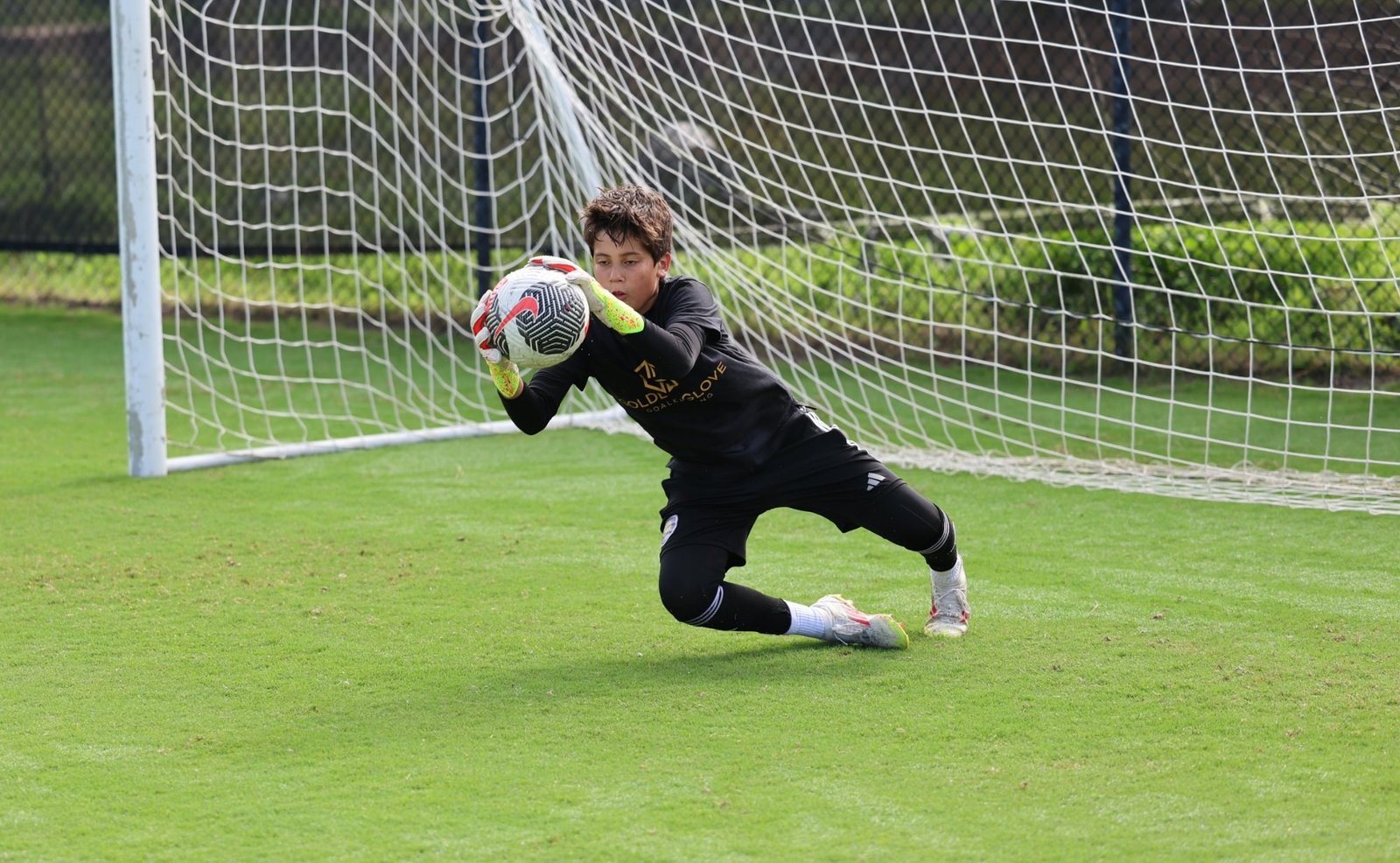
Training
Hand-Eye Coordination for Goalkeepers:
There is a common belief that hand-eye coordination is something you either have or you do not. That it is genetic — like height or foot speed — and training can only take you so far. That belief is wrong, and it costs goalkeepers years of development.
Hand-eye coordination is a skill. It is a trainable, measurable, improvable neurological function. Elite goalkeepers are not born with faster reflexes — they have trained their visual system, their brain processing speed, and their motor response to work together more efficiently than the average person. Every single piece of that process can be improved with the right work.
Here is what the research says, and more importantly, what it means for your training.
When a ball is struck, your eyes do not simply "see" it and send a signal to your hands. The process is more complex and more trainable than that. Your eyes track the ball and send information to the visual cortex. That information is processed into a predicted trajectory. A motor command is then generated and sent to your muscles. Your hands move in response to a prediction, not the ball itself.
This is why elite goalkeepers appear to start moving before the ball is struck — because the best ones literally do. They are reading cues from the shooter's body before the shot happens, which gives the brain more processing time. The technical term is anticipatory saccades — predictive eye movements to where the ball will be. It is a skill, and it can be trained.
"The goalkeeper who saves the penalty did not react faster. They predicted better. Reaction is the last line of defense — prediction is the game."
Your ability to follow a fast-moving object cleanly. This degrades under fatigue and improves with focused practice. Keepers who train this specifically can track a 90mph shot longer before their visual system loses the ball — which means better positioning at the moment of contact.
The time between seeing the cue and initiating the movement. This is where most of the trainable gains live. Research on tennis players, baseball batters, and goalkeepers consistently shows that processing speed improves significantly with high-repetition, varied stimulus training — the kind that forces the brain to make fast decisions under uncertainty.
How precisely your hands move when your brain sends a fast signal. Accuracy degrades when speed increases — unless you have trained the specific motor patterns at full speed repeatedly. This is why slow drills do not transfer directly to game speed. You need to train the pattern fast.
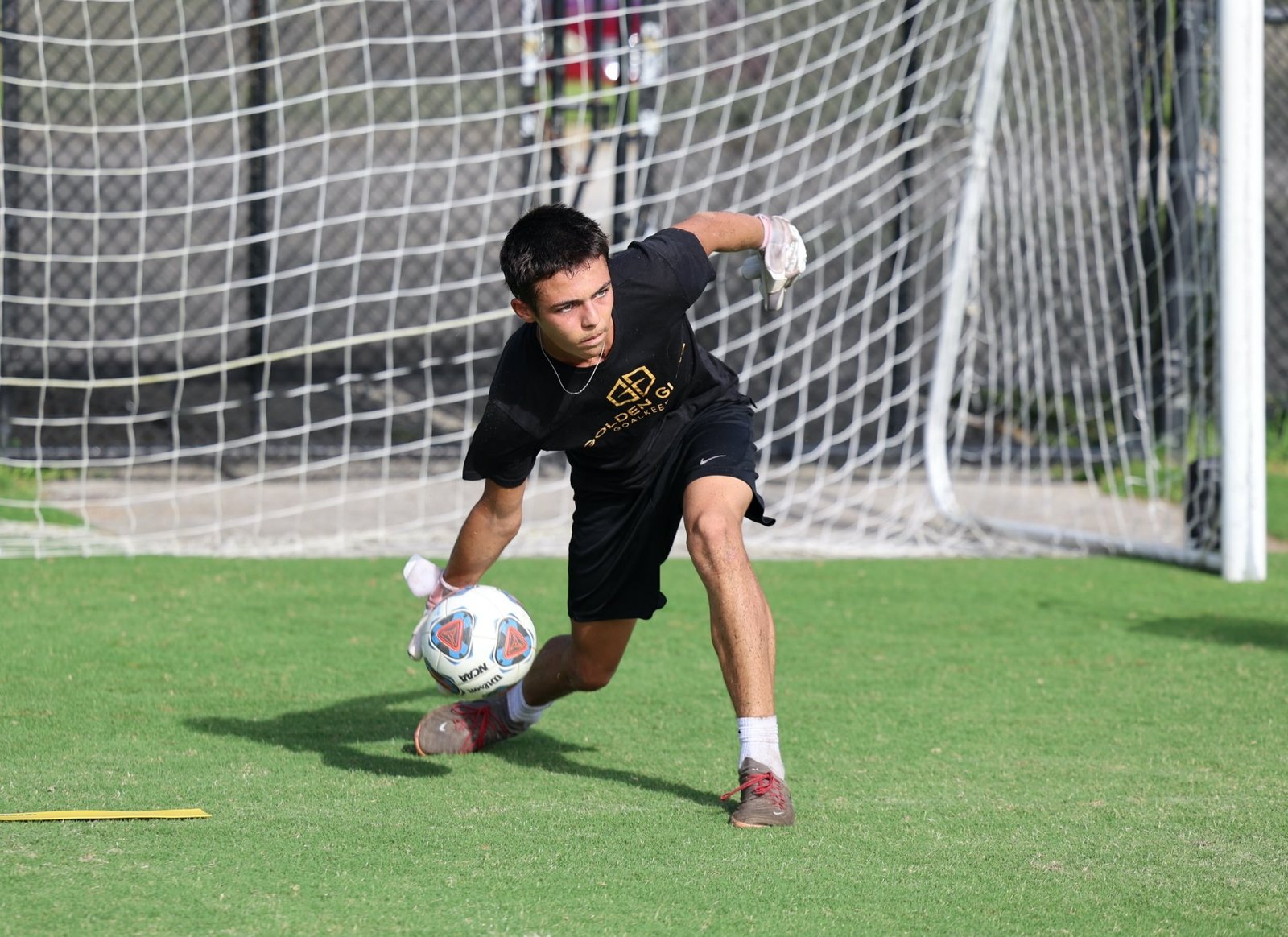
Stand 2–3 feet from a concrete wall. Throw a tennis ball at the wall with one hand and catch it with the other. Start slow and increase speed. Progress to throwing with eyes closed and opening them as the ball leaves your hand — forcing your eyes to pick up the ball mid-flight. 3 sets of 30 reps. This trains both tracking speed and cross-lateral motor response.
A reaction ball (hexagonal rubber ball) thrown at a hard surface bounces unpredictably. 5 minutes of reaction ball work trains your brain to process trajectory uncertainty faster than any standard drill. The key: stay on the balls of your feet, no pre-leaning. Reward correct reads with catches — the ball does not lie about your reaction time.
Stand facing a partner 8–10 yards apart, both in set position. Partner holds a ball in each hand at shoulder height. They randomly drop one — you dive to the corresponding side and make the catch at low level. Speed up the drops over 3 sets of 8 reps each side. This forces fast motor decisions with no anticipation advantage.
Have a shooter take shots from 12–15 yards. Before they strike, call your predicted dive direction out loud — left, right, or center. Track your accuracy over 20 shots. Then watch film of your matches and do the same exercise — predict before you watch yourself react. This builds the specific pattern recognition that translates to penalty saves.
Most hand-eye training is done fresh. Elite preparation adds a focused reflex set in the last 10 minutes of training, when the brain is tired. 10 rapid-fire balls from 6–8 yards at the end of every session. This trains your system to maintain tracking accuracy under fatigue — which is when most goals are conceded in the 80th minute.
Some of the most effective hand-eye training does not involve a soccer ball at all. The visual system does not distinguish between sport types — it responds to challenge and repetition.
Research on perceptual-motor training in athletes suggests measurable improvement in reaction speed within 4–6 weeks of consistent, focused training at 3–4 sessions per week. Significant improvement takes 3–6 months. The gains are not spectacular week-to-week, but they compound — and unlike physical strength, trained visual processing does not decline as sharply in the off-season.
The goalkeepers who work on this in December are better by March. The ones who start in March are hoping for natural ability to carry them through the season.
Private sessions in Central Florida focused on what actually separates good keepers from great ones — technique, positioning, distribution, and the mental game. All ages welcome.
View Training Options